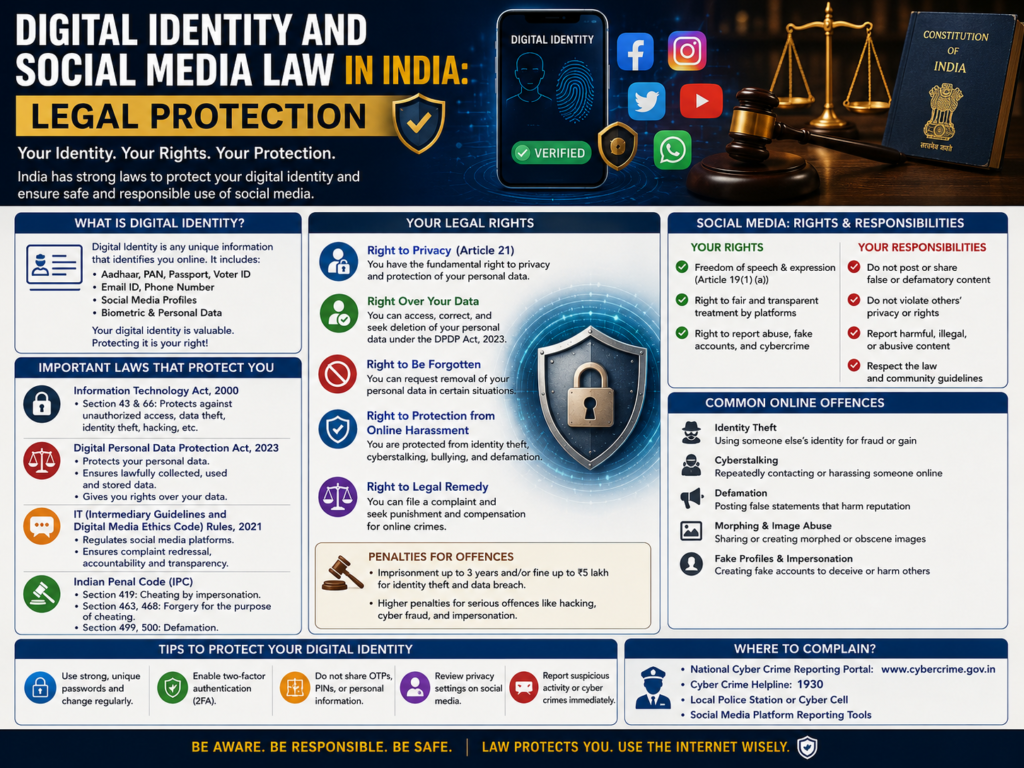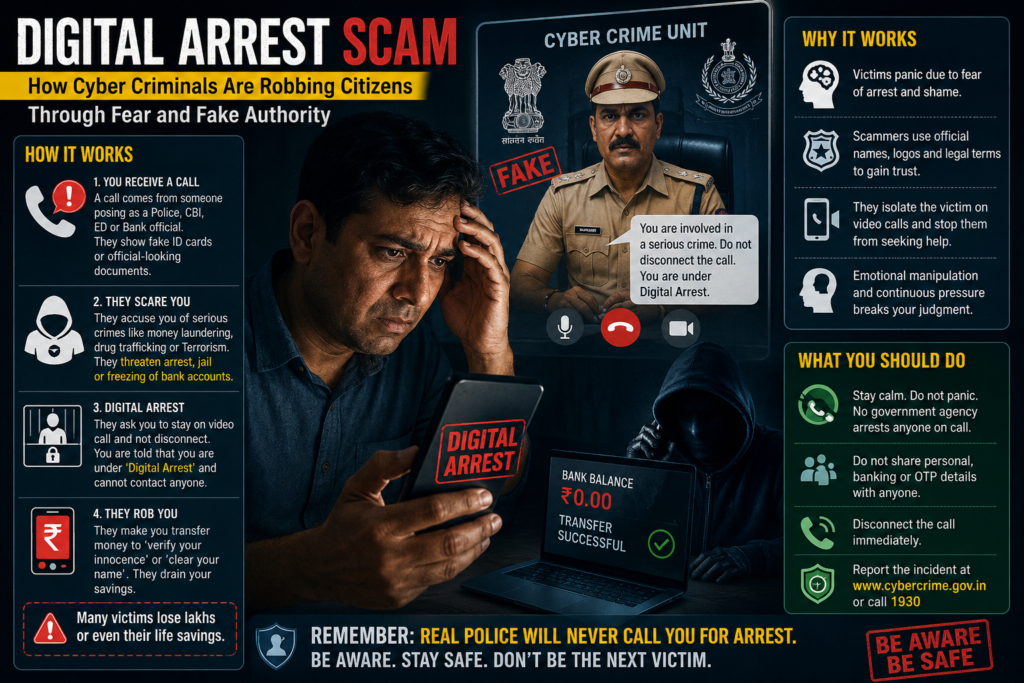
Cyber crime rates are increasing with the rise of the digital era. From UPI scams and fake investment schemes to social media impersonation and phishing attacks, thousands of Indians lose money every day to cybercriminals. The Government of India has established dedicated mechanisms such as the National Cyber Crime Reporting Portal and the 1930 Cyber Helpline to help victims report fraud and recover their funds.
This guide explains the legal process, complaint procedure, required documents, recovery options, and rights available to victims of online financial fraud in India.
What is Cyber Fraud?
Cyber fraud refers to any illegal activity carried out through computers, mobile devices, digital platforms, social media, banking networks, or the internet with the intention of cheating, stealing money, identity theft, or obtaining unauthorized access to financial accounts.
Common examples include:
- UPI and QR Code scams
- Credit and debit card fraud
- Online investment fraud
- Job and employment scams
- Fake loan applications
- WhatsApp and Telegram fraud
- Social media impersonation
- Phishing and fake websites
- OTP and banking credential theft
Legal Framework Governing Cyber Fraud in India
Cyber fraud is punishable under various provisions of Indian law, including:
Information Technology Act, 2000
Relevant provisions include:
- Section 43 – Unauthorized access and damage to computer systems.
- Section 66 – Computer-related offences.
- Section 66C – Identity theft.
- Section 66D – Cheating by personation using computer resources.
Bharatiya Nyaya Sanhita (BNS), 2023
Depending on the nature of the fraud, offenders may be prosecuted for:
- Cheating
- Criminal breach of trust
- Forgery
- Criminal intimidation
- Impersonation
Punishment may include imprisonment, fines, or both.
Immediate Steps After Discovering Cyber Fraud
The first few hours after a cyber fraud incident are extremely crucial.
Step 1: Call 1930 Immediately
Victims should immediately contact the National Cyber Crime Helpline at 1930.
The sooner the complaint is lodged, the higher the possibility of freezing the fraudulent transaction before the money is withdrawn or transferred further.
Step 2: Inform Your Bank
Contact your bank’s customer care and:
- Report the unauthorized transaction.
- Request temporary blocking of the account if necessary.
- Ask for a complaint reference number.
Step 3: Preserve Evidence
Collect and save:
- Screenshots of chats and messages
- Payment receipts
- Transaction IDs
- UTR numbers
- Bank statements
- Website URLs
- Social media profiles involved
How to File an Online Cyber Crime Complaint
Victims can file complaints through the official National Cyber Crime Reporting Portal:
Website: cybercrime.gov.in
Registration Process
- Visit the portal.
- Register using your mobile number.
- Verify OTP.
- Create a user profile.
- Select the relevant complaint category.
Categories Available
- Financial Fraud
- Women and Child Related Crimes
- Social Media Harassment
- Fake Profiles
- Identity Theft
- Other Cyber Crimes
Documents Required for Filing a Cyber Fraud Complaint
Personal Information
- Full Name
- Mobile Number
- Email Address
- Residential Address
Identity Proof
Any one of the following:
- Aadhaar Card
- PAN Card
- Voter ID
- Passport
- Driving Licence
Financial Information
- Bank Account Details
- UPI ID
- Wallet Information
- Transaction ID
- UTR Number
- Amount Lost
Supporting Evidence
- Screenshots
- Emails
- Chat records
- Payment confirmations
- Fraudulent links
- Suspect details (if available)
Importance of Transaction ID and UTR Number
The Transaction ID or UTR (Unique Transaction Reference) Number is one of the most important pieces of evidence in financial fraud cases.
Authorities use this number to:
- Trace fund movement
- Identify beneficiary accounts
- Freeze fraudulent transactions
- Assist in recovery proceedings
Victims should keep this information readily available before filing a complaint.
How to Report Fake Instagram, Facebook, or WhatsApp Accounts
Victims of impersonation, harassment, or fake social media profiles can also use the National Cyber Crime Reporting Portal.
Required details generally include:
- Profile URL
- Username
- Screenshots of the fake profile
- Messages received
- Date and time of occurrence
Providing clear screenshots significantly strengthens the investigation.
Can a Family Member or Lawyer File a Complaint?
Yes.
A complaint may be filed by:
- Parent
- Spouse
- Sibling
- Authorized representative
- Advocate
The complainant must disclose the relationship with the victim and provide the victim’s identity proof while submitting the report.
How to Track Your Cyber Crime Complaint
After successful submission, the portal generates a unique acknowledgement number.
To track your complaint:
- Visit the cybercrime portal.
- Select “Track Your Complaint.”
- Enter the acknowledgement number.
- Verify using OTP.
- View the latest status of the investigation.
Always save the acknowledgement number carefully for future reference.
How Long Does Money Recovery Take?
Recovery timelines vary depending on:
- Speed of reporting
- Amount involved
- Number of intermediary accounts
- Cooperation between banks and investigating agencies
In many cases, immediate reporting within 24 hours greatly improves the possibility of freezing the funds before they are withdrawn.
While recovery is not guaranteed in every case, prompt action substantially increases the chances of success.
What Happens If Your Bank Account Is Frozen?
Bank accounts may be frozen during cybercrime investigations when authorities suspect involvement in the fraudulent transaction chain.
If your account has been frozen:
- Contact your bank immediately.
- Obtain details of the investigating agency.
- Submit supporting documents proving legitimate transactions.
- Cooperate with the investigating officer.
- Seek legal assistance if necessary.
In certain situations, court intervention may be required for release of the account.
Common Mistakes Victims Should Avoid
- Delaying the complaint.
- Deleting evidence.
- Contacting scammers repeatedly.
- Sharing OTPs or passwords.
- Entering incorrect information in the complaint form.
- Ignoring bank alerts.
Even a small error in transaction details may delay investigation and recovery efforts.
Frequently Asked Questions (FAQs)
Is there a time limit for reporting cyber fraud?
Although complaints can be filed later, reporting within 24 hours offers the best chance of fund recovery.
Is filing a complaint free?
Yes. Filing a complaint through the National Cyber Crime Reporting Portal is free of cost.
Can I file a complaint without suspect details?
Yes. Suspect information is optional. Authorities can investigate based on transaction records and evidence provided.
Can I submit screenshots as evidence?
Yes. Screenshots of messages, payment confirmations, emails, and social media profiles are accepted.
Can a lawyer file the complaint for me?
Yes. Advocates and authorized representatives may file complaints on behalf of victims.
Cyber fraud is a serious threat in today’s digital world, but victims are not helpless. India’s cybercrime reporting framework, supported by the 1930 helpline and the National Cyber Crime Reporting Portal, provides a structured mechanism for reporting offences, tracing transactions, and pursuing recovery of lost funds.
The most important factor in successful recovery is speed. Victims should report fraud immediately, preserve evidence, and follow the legal process diligently. Timely action can significantly improve the chances of tracing funds and bringing cybercriminals to justice.